Hot Air Oven Temperature Time is an important consideration in dry heat sterilization. Selecting the correct temperature and exposure time helps achieve effective results when processing suitable heat-resistant materials such as glassware and metal instruments.
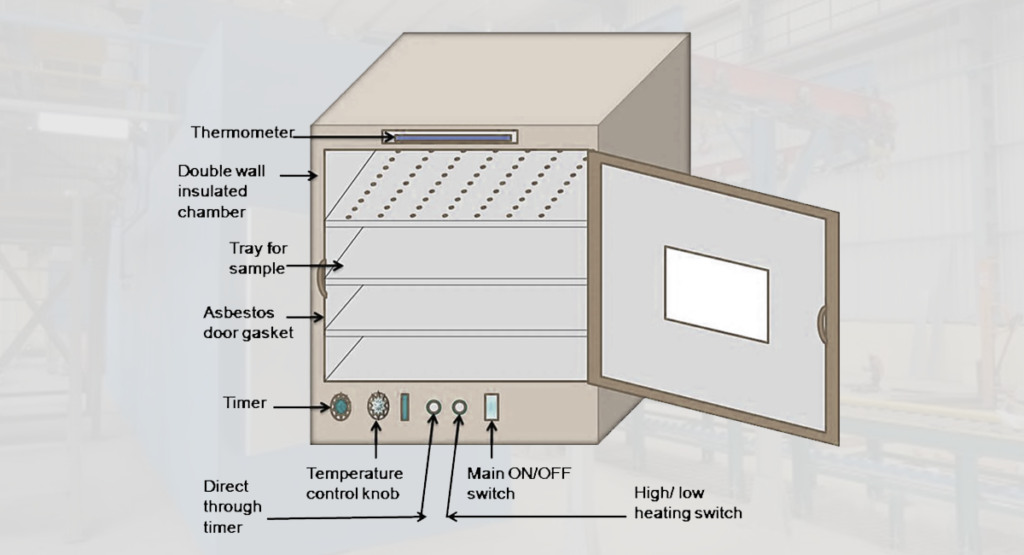
A hot air oven diagram also helps users understand how the equipment works. It shows the main components, including the heating element, air circulation fan, temperature sensor and control panel. In this guide, we cover the working principle, labelled parts, temperature-time chart, and practical laboratory applications.
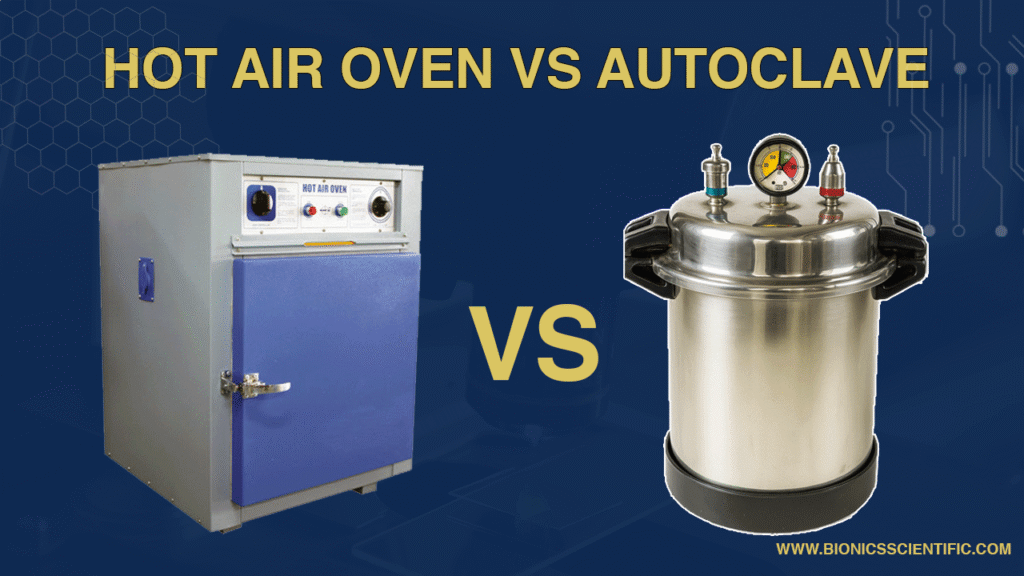
Although hot air ovens and autoclaves are both used for sterilization, they work differently. A hot air oven uses dry heat, while an autoclave uses steam under pressure. Understanding this difference helps laboratories select suitable equipment for their materials and applications.
Quick Summary: A hot air oven uses dry heat to process suitable heat-resistant materials, including glassware, metal instruments, and certain powders or oils. Its performance depends on the selected temperature, exposure time, air circulation, and load arrangement. The correct operating cycle should always follow the equipment manufacturer’s instructions and a validated laboratory procedure.
Specifications
| Specification | Details |
| Temperature Range | Up to 200°C |
| Controller | PID Digital |
| Air Circulation | Forced Air |
| Safety | DIN 12880 |
| Capacity | 22L–600L |
Hot Air Oven Temperature Time—Sterilization Chart
Get this part wrong and you either under-sterilize the batch or waste hours running a cycle longer than it needed to be. Here’s what’s standard:
| Material | Temperature | Time |
| Glassware | 160°C | 2 hours |
| Metal instruments | 170°C | 1 hour |
| Powders | 150°C | 2.5 hours |
Higher temperatures may allow shorter holding times, but the correct sterilization cycle depends on the material, load, oven performance, and validated laboratory procedure. Always follow the equipment manufacturer’s instructions and your laboratory SOP when selecting temperature and exposure time.
For more information about dry-heat sterilization methods, temperature requirements, and sterilization procedures, refer to the CDC guidelines for dry-heat sterilization.
What Is a Hot Air Oven?
Strip away the branding and it’s just heat and moving air. No steam, no pressure, no liquid disinfectant. Because there’s zero moisture inside the chamber, it’s the obvious pick for anything that rusts, warps, or reacts badly to water—glassware, scalpels, forceps, and dry powders being the usual suspects.
An autoclave, for comparison, sterilizes with pressurized steam. Faster, yes, but not something you’d want touching a tray of surgical steel that needs to come out rust-free.
How Does a Hot Air Oven Work?
Several important components work together to maintain the required temperature and distribute heat throughout the chamber:
- Heating element—this is what generates the heat in the first place
- Fan – keeps that heat moving so you don’t get hot and cold spots
- Thermostat – holds everything at the temperature you set
- Insulated walls – keep the heat in instead of leaking out and wasting energy
You load the racks, punch in a temperature and time, and the oven takes it from there. In practice, though, a few small habits make a real difference:
- Preheat the hot air oven if required by the equipment manufacturer or your laboratory SOP. Sterilization holding time should be counted according to the validated procedure after the required operating conditions are reached.
- Set temperature and time based on what’s actually going in—don’t just reuse yesterday’s settings out of habit.
- Leave gaps between items on the tray. Crammed shelves block airflow and you’ll get uneven results.
- Seal the door properly. A door that’s not fully shut bleeds heat the whole time.
- Watch the display, at least occasionally, to confirm it’s holding temperature—not just hitting it once and drifting.
- Let it cool before opening. Pulling the door open right after the cycle ends is how glassware cracks from thermal shock.
- Use gloves or tongs when unloading. Obvious, but it’s the most common way people get burned.
- Close the door again once you’re done, so dust doesn’t settle in the chamber before the next run.
Hot Air Oven Diagram with Labelled Parts
A hot air oven diagram provides a clear view of the equipment’s main components and their arrangement. It helps users identify the heating element, air circulation fan, insulated chamber, temperature control system, and other important parts.
Understanding the labelled diagram makes it easier to learn how the oven generates heat, distributes hot air and maintains the selected operating temperature.
| Part | What it does |
| Outer body / insulated chamber | Keeps heat in, keeps energy costs down |
| Heating element | Generates heat |
| Blower / fan | Moves that heat around evenly |
| Thermostat | Holds the set temperature |
| Digital display | Shows what’s happening in real time |
| Air vent | Lets moisture escape so the chamber stays dry |
| Shelves / racks | Where the actual items sit |
| Door with gasket seal | Keeps the chamber sealed and heat-tight |
The Actual Sterilization Principle
A hot air oven uses dry heat to destroy microorganisms through processes that primarily involve oxidation of cellular components. The heating element generates heat, while the circulation fan helps distribute hot air throughout the chamber.
As the materials absorb heat, the required temperature is maintained for the specified exposure period. Effective sterilization depends on proper heat distribution, suitable loading, temperature accuracy, and sufficient exposure time.
Unlike steam sterilization, this process does not rely on moisture or pressurized steam. This makes dry heat suitable for certain materials that need to remain dry during processing.
Why Labs Use Them
- No water or steam needed, unlike an autoclave—which matters if you’re sterilizing anything that shouldn’t get wet
- Cheap to run—most models really are just “set temperature, press start.”
- Standard models go up to 200°C
- Benchtop units are small enough to fit on a normal counter and plug into a regular wall socket
- Zero rust risk on metal tools, cycle after cycle
- Shallow chamber depth makes loading and unloading straightforward
- Runs near atmospheric pressure, so you don’t get the explosion risk that comes with pressurized steam systems
- No corrosive residue left behind, since there’s no liquid disinfectant involved at all
- Even airflow means dense items—porcelain, for instance—actually reach sterilizing temperature all the way through, not just on the surface
Where They Fall Short
They’re effective, not universal. A few honest limitations:
Plastics, rubber, and surgical dressings are off the table entirely—dry heat will melt or warp them, so those need an autoclave or chemical disinfection instead. Some resistant bacteria and prions can also survive a standard dry-heat cycle, since there’s no steam or pressure to help break them down the way an autoclave does. And cycles just take longer—an hour or two, compared to the 15–30 minutes an autoclave needs, so if speed is the priority, this isn’t it.
None of that makes Hot Air Oven Temperature Time a bad choice. It just means they’re the right tool for glassware, metal, and powders—not a replacement for every sterilization method out there.
Precautions Worth Actually Following
- Only load materials rated for dry heat. Nothing flammable, ever.
- Wrap glassware and instruments properly before loading — cotton wool plugs at the mouth of tubes and flasks are standard for a reason.
- Let the chamber drop to at least 40°C before opening. Opening early is the single most common cause of cracked glassware.
- Gloves or tongs, always, when handling anything that just came out.
- Don’t overcrowd the shelves — airflow needs room to actually move.
Keeping It Running Properly
Clean the chamber and racks on some kind of schedule, not just when it looks dirty. Check the heating element, fan, and thermostat every so often for wear—these parts fail slowly, so a brief look now and then catches problems before they become a ruined batch. Recalibrate the thermostat periodically, since drift happens even on reliable units. And if you notice uneven heating or a temperature that won’t hold steady, deal with it right away instead of letting it run for another few weeks hoping it fixes itself.
What Goes In (and What Definitely Doesn’t)
Fine to load: glassware like flasks, beakers, and pipettes; metal instruments such as forceps and scalpels; and any powders, oils, or waxes that are heat-stable.
Keep out: plastic, rubber, and most fabrics. They’ll melt, char, or otherwise get ruined.
This is really the whole distinction between a hot air oven and an autoclave in one sentence—an autoclave uses pressurized steam at lower temperatures and shorter times, which makes it the better fit for liquids, fabrics, and surgical tools, while a hot air oven is built specifically for glassware and powders. Baking versus pressure cooking, more or less. Same goal, entirely different method.
Price in India
| Type | Approximate Price Range |
| Small Laboratory Forced-Air Oven | ₹18,000 – ₹35,000 |
| Benchtop Sterilization Oven | ₹35,000 – ₹75,000 |
| Industrial Drying Oven | ₹75,000 – ₹200,000+ |
| Customized Systems | Depends on specifications |
What you pay depends on chamber size, insulation quality, airflow design, how much automation is built in, and whether it’s custom-built. Research labs and teaching institutes usually land on benchtop models; pharmaceutical and manufacturing operations tend to need the industrial-scale units.
FAQs
What is a hot air oven used for?
Dry heat sterilization of glassware, metal instruments, and heat-stable powders—plus general drying and thermal testing in labs.
How does it work?
A heating element warms the air, a fan circulates it, and a thermostat holds the chamber at the set temperature for the full cycle.
What temperature range can a hot air oven reach?
The temperature range depends on the model and configuration. Refer to the manufacturer’s specifications for the maximum operating temperature of the selected hot air oven.
What can be sterilized in one?
Glassware, metal instruments, and heat-stable powders. Not plastics, rubber, or fabrics—those need an autoclave.
How is it different from an autoclave?
Dry heat versus pressurized steam. The oven suits glassware and powders; the autoclave suits liquids, fabrics, and surgical tools and works faster.
Why bother with dry heat instead of just autoclaving everything?
Because some materials—glassware, metal tools, oils, and powders—either can’t handle moisture or corrode under steam. Dry heat avoids both problems.
What safety steps matter most?
Load only heat-tolerant, non-flammable materials, don’t overcrowd the shelves, and let it cool before opening the door.
How do you maintain one?
Regular cleaning, periodic checks on the heating element and fan, and occasional thermostat recalibration.
Who actually uses these?
Pharmaceutical labs, microbiology labs, research institutions, and manufacturing facilities—basically anywhere glassware, metal tools, or powders need to come out sterile and dry.
What is a hot air oven diagram?
A hot air oven diagram is a labelled illustration showing the main components, including the heating element, fan, insulated chamber, temperature sensor and control panel.
What are the main parts of a hot air oven?
The main parts include the heating element, air circulation fan, thermostat, temperature sensor, digital controller, shelves and insulated chamber.
Bottom Line
A hot air oven is a useful piece of laboratory equipment for applications that require controlled dry heat. Understanding its diagram, main components, and working principle helps users operate the equipment more effectively.
Choosing the correct temperature and exposure time is equally important for achieving the required results. With proper loading, regular maintenance, and adherence to the manufacturer’s operating instructions, a hot air oven can support routine laboratory drying and suitable dry-heat sterilization applications.
Looking for a laboratory hot air oven?
Bionics Scientific builds them for pharmaceutical, microbiological, research, and industrial use—PID digital control, DIN 12880 safety protection, capacities from 22 L to 600 L, and custom configurations if the standard range doesn’t fit your setup.
📧 info@bionicsscientific.com | 📞 +91 9111161955