Autoclave sterilisation: Sterilisation with autoclaves has become the cornerstone of contamination-free operations in laboratories, hospitals, and industries. In whichever context you find yourself—working with microorganisms, processing drugs, or performing surgery—the sterilisation method you choose will significantly affect your work.
Sterilisation by autoclaving is the preferred and most common method of sterilisation because of its highly efficient microorganism elimination capacity through the application of steam under carefully regulated temperatures and pressures. Most people, however, have a challenging time comprehending how an autoclave operates, the important aspects of autoclave sterilisation, and which type of autoclave machine best suits a particular task. Here is your complete guide.
Autoclave sterilisation is considered one of the most effective and reliable methods of eliminating microorganisms in laboratories, hospitals, and industrial settings.
What is an autoclave? – Autoclave Definition and Meaning
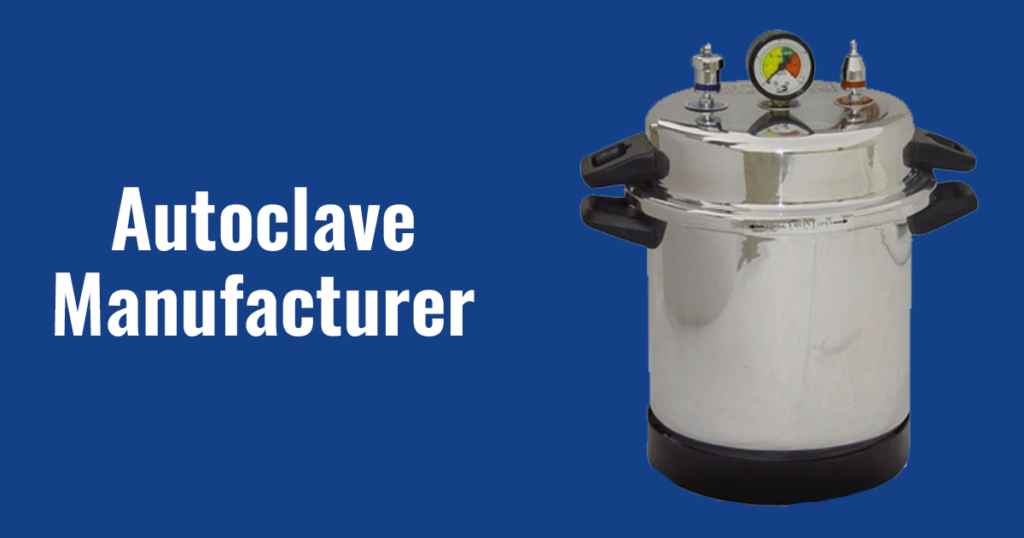
An autoclave is a device in which high-pressure steam is generated for sterilisation purposes. Put simply, the autoclave definition may be stated as follows: an instrument used to kill bacteria, fungi, viruses, and spores using heat and pressure.
There are many other meanings of ‘autoclave’ than that. In scientific settings, an autoclave symbolises reliability and safety. From laboratory testing to the manufacturing of medicines, autoclaves play an essential role in every scientific process.
Concept of the Autoclave Principle
It is essential for individuals intending to purchase and use the autoclave equipment to understand the principles of its functioning. The autoclave principle functions on steam heating, which is more effective than hot air heating.
This process entails the boiling of water to produce steam in the sealed system. As the pressure inside the apparatus builds, the boiling point of the water rises beyond 100 degrees. The steam produced destroys proteins and kills any microbes by penetrating into the materials.
Three major components affect sterilisation.
Procedure of Autoclave Sterilization
The procedure of autoclave sterilisation occurs systematically, with the objective of ensuring all organisms are eliminated. First, water is placed in the autoclave chamber and heated to produce steam. The air inside the chamber is also evacuated because it may interfere with the entire process.
Once the steam in the autoclave reaches the predetermined temperature of either 121°C or 134°C, the pressure will rise to about 15-30 psi. At this point, the sterilisation process will begin, during which the item being sterilised is subjected to steam at the desired pressure level for some time.
Then comes the stage of cooling the object, where drying may also occur.
The Significance of Autoclave Temperature
The temperature in an autoclave is very significant, as far as sterilisation effectiveness is concerned. Two types of temperatures are normally used in autoclaves: 121°C and 134°C. These two temperatures are used when standard sterilisation and special sterilisation are required, respectively.
A sterilisation temperature of 121°C would take around 15 to 30 minutes depending on the load. 134°C would ensure sterilisation within shorter periods, thus making the autoclave ideal for rapid processes like those in the hospital and pharmaceutical industries.
It is vital to note that even minor temperature fluctuations could affect sterilisation processes. Therefore, modern autoclaves have automatic temperature regulation facilities and digital meters.
Autoclave Machine Types
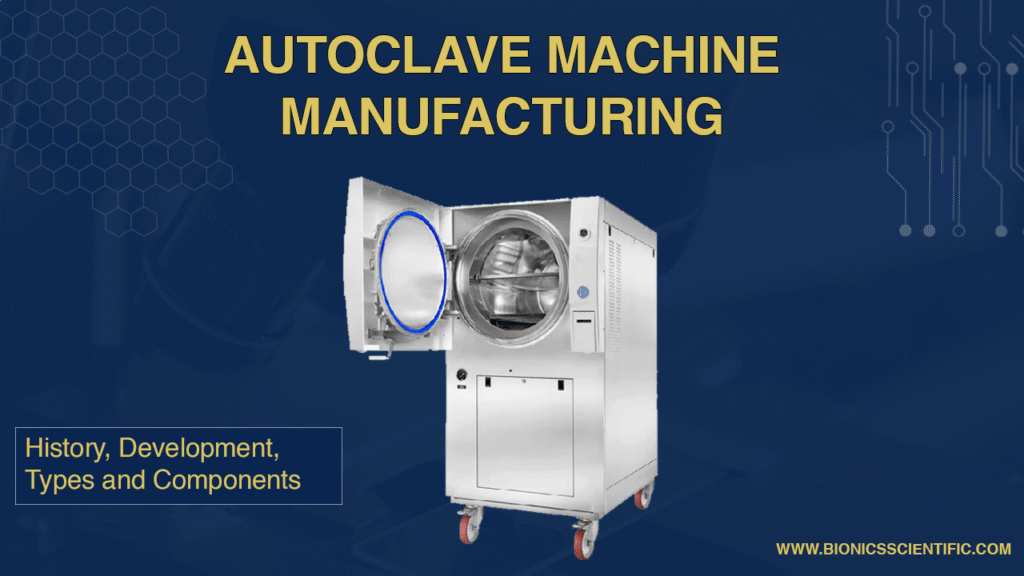
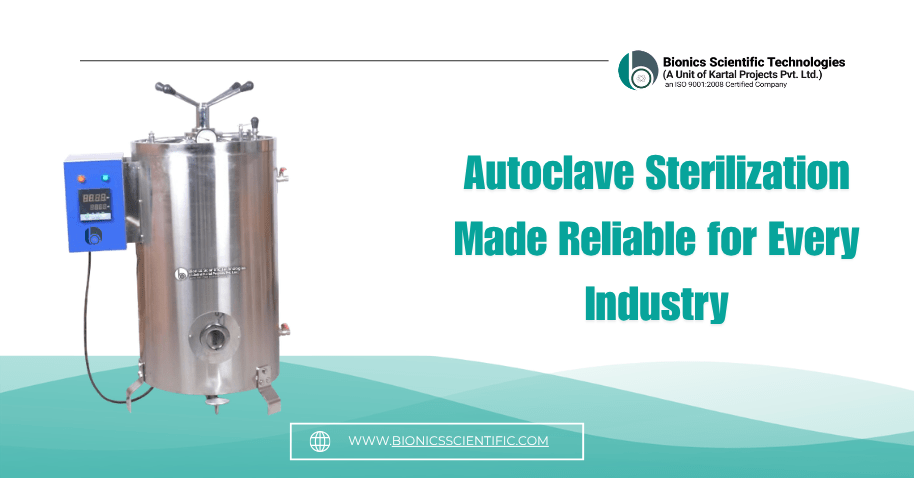
The selection of appropriate types of autoclave machines largely relies on factors such as requirements, the amount of work and the available space. The laboratory-type autoclave machines are smaller and intended for use in labs. Vertical autoclave machines have a wide range of uses in laboratories due to their efficiency.
Horizontal autoclave machines suit industrial or pharmaceutical settings since they can accommodate more loads. The portable type of autoclave machines suits mobile operations.
They are all tailor-made for certain uses.
Differences Between Vertical and Horizontal Autoclave
Selecting between a vertical or horizontal autoclave is probably the most critical decision a buyer must make.
|
Parameter |
Vertical Autoclave |
Horizontal Autoclave |
|
Best Purpose |
Good for labs and research institutions |
Best suited for hospitals/pharmaceuticals |
|
Capacity |
Smaller to mid-sized |
Mid to larger |
|
Space Requirement |
Needs lesser installation space |
Needs more space to install |
|
Price |
Less expensive |
Expensive |
|
Automation |
Semi-manual |
Automatic |
|
Sterilizing Ability |
Best for light usage |
Built for heavy use |
A vertical autoclave is the perfect choice for laboratories with occasional uses, whereas a horizontal autoclave suits industries that need bulk processing best.
Which Autoclave Would Suit Your Application
The selection of the correct autoclave depends highly on the application.
The vertical autoclave is perfectly suited for applications that require conducting various tests, microbiology experiments, and sterilising glassware. The vertical autoclave is small in size, relatively cheap, and ideal for day-to-day use.
When there is a demand for sterilisation in hospitals and the pharmaceutical sector, the best autoclave to choose is a horizontal one.
The horizontal autoclave is capable of accommodating large loads while providing consistent performance.
In situations where precision is vital, coupled with repetitive tasks, the automatic autoclave is recommended.
This autoclave not only reduces cost but also increases efficiency.
Introduction to Autoclave Diagram
The autoclave diagram serves to explain how the device works internally and what its structure consists of. Its parts include the pressure chamber, the heating system, the water container, the control board, the safety valve, and the exhaust system.
The pressure chamber has an appropriate resistance to high pressure and temperature, while the heating system supplies the steam. Sensors monitor the temperature and pressure all the time. It is necessary for the safety and proper functioning of the device.
Knowing its inner structure enables us to use the device correctly and properly maintain it.
Use of Autoclave Sterilization
Autoclave sterilisation has many applications in various industries. It is used in laboratories to sterilise equipment and devices. It is used in hospital environments to keep surgical instruments clean from microbes.
The pharmaceutical industry uses autoclave sterilisation techniques to sterilise equipment for production and product safety. The food and beverages industry also uses similar methods for preservation purposes.
Due to the versatility of this technique, autoclaves are vital in any environment that requires sterilisation.
High Performance Specifications of an Autoclave Machine
The table below shows the general specification chart, which denotes a quality autoclave machine:
Specifications
|
Parameter |
Specification range |
|
Temperature range |
121 °C to 134 °C |
|
Pressure range |
15 to 30 PSI |
|
Material of Chamber |
Stainless Steel (SS 304/316) |
|
Capacity |
20 Litres to 200 Litres+ |
|
Control system |
Digital / PLC आधारित |
|
Safety features |
Pressure release valve, alarm |
|
Heating system |
Electric steam generation |
|
Power supply |
220V / 50Hz |
This specification is designed to improve durability and efficiency during sterilisation.
Autoclave Price List (India)
It is essential to know the cost of an autoclave, although choosing the correct one depends on application and functionality as well.
|
Type of Autoclave |
Useful For Capacity (Limit (L)) |
Price Range (INR) |
|
Basic Vertical Small labs & colleges |
20-50 L |
₹30,000 – ₹70,000 |
|
Standard Vertical Research labs |
50-100 L |
₹70,000 – ₹150,000 |
|
Digital Autoclave Advanced lab uses |
100-150 L |
₹120,000 – ₹250,000 |
|
Horizontal Semi-Auto Hospitals/industries |
150-300 |
₹250,000 – ₹500,000 |
|
Fully Automatic Autoclave |
300–600 L |
₹500,000 – ₹1,200,000 |
Why Most Autoclaves Don’t Work In Practice
The primary mistake many people commit when buying an autoclave is making their choice purely based on its price.
Poorly manufactured autoclaves tend to suffer from several problems, ranging from unequal heating to poor sterilisation and even constant malfunctions. Such issues will inevitably bring about failed tests, disqualified samples, and additional costs related to maintenance and repairs.
Failure to sterilise in a critical environment will have dire consequences.
That is why selecting a high-quality autoclave becomes much more important than looking for the cheapest one available.
Example from Real Life: Why the Proper Autoclave Matters
In most laboratories, cheap autoclaves are often regarded as the right decision. However, this option is responsible for various troubles afterwards. Thus, the issue of culture medium contamination that occurred frequently in one microbiology lab was attributed to poor distribution of steam and low temperature control in the autoclave used.
The replacement of the old autoclave with a new one, which had advanced features that ensured more precise temperature regulation and heat distribution, resulted in substantial benefits for the sterilisation process and fewer rejections.
The same applies to the pharmaceutical industry, where any discrepancy from ideal conditions results in non-compliance with standards and rejections. Therefore, the companies make use of automatic autoclaves with built-in monitoring systems.
It is important to refer to this experience to understand how vital the proper autoclave is for quality control.
How to Choose an Autoclave for Your Purpose
You can select an ideal autoclave for your purposes by following these processes. If you require an autoclave for a laboratory setting, a vertical type would suffice for your tests. On the other hand, in an industrial process, an automatic horizontal type would work best.
Other factors that may also guide your decision include the size of the autoclave, precision of temperature control, and after-sales services, amongst others.
The Importance of Quality in Autoclaving
In the evaluation of various brands, quality must be the primary consideration. The use of high-quality autoclaves can help ensure proper heating and temperature control along with longevity. On the other hand, low-quality autoclaves can provide inconsistent results and require expensive maintenance.
A dependable company should concentrate on precision design, quality materials, and quality control tests.
The Importance of Choosing the Correct Manufacturer
The autoclave is not merely a device but rather a significant investment for the future.
When selecting a dependable manufacturer, you will be sure to get high-quality equipment, accurate temperature control, and durable performance. Besides, competent aftersales services, help with installation, and technical assistance are essential factors.
Collaboration with a knowledgeable and reliable supplier guarantees precise, effective, and safe operation.
Conclusion
Autoclaving sterilisation is one of the most efficient ways of creating sterile environments in different institutions, such as labs and health facilities, as well as manufacturing processes. Knowledge of what an autoclave is, the principles, temperatures needed, and autoclave machines will help make an informed decision.
If you intend to buy an autoclave or replace an old machine, it is very important to invest in an accurate, safe, and durable autoclave. An appropriate autoclave selection increases efficiency and adds to your organisation’s professionalism.
Commonly Asked Questions (FAQs)
What autoclave sterilization is for
Autoclave sterilisation is performed to kill microorganisms in lab tools, medical instruments, and industrial apparatuses with steam.
What autoclave temperature is standard
Standard autoclave temperature is 121°C for regular sterilisation and 134°C for fast and important sterilisation.
How does an autoclave work
An autoclave works with the help of steam generation at high pressure, a rising temperature, and exposure to moist heat.
What autoclave principle is
The principle of an autoclave is sterilisation due to moist heat when steam effectively transfers thermal energy to kill microorganisms.
What influences the price of an autoclave
The price of an autoclave varies depending on its capacity, degree of automation, quality of materials, range of temperatures, and extra safety measures.
How to pick an autoclave
An autoclave should be selected according to its type of application, capacity, temperature range, and financial capabilities.
Autoclave Selection to Meet Your Requirement
In case you wish to purchase an autoclave, getting the incorrect type may cause problems and increase costs.
We will help you find out what you need precisely, compare the best autoclaves that meet your needs, and provide prices in less than 24 hours.