Rotary Kiln Incinerator: Working Principle, Components, Applications & Advantages
In Rotary Kiln Incineration, there is a disposal process that is done by treating waste using high temperatures in a rotary kiln. In a rotary kiln, there is a rotating cylinder where suitable waste material is treated in form of solid, liquid and mixed wastes.
This chapter will focus on the rotary kiln incinerator and its working principle of the rotary kiln incinerator, components of a rotary kiln incinerator, operational conditions of the rotary kiln incinerator, industries using the rotary kiln incinerator, emissions control, and selection criteria.
- Rotary Kiln Incinerator: Working Principle, Components, Applications & Advantages
- Rotary Kiln Incinerator Specifications
- What is a Rotary Kiln Incinerator?
- Rotary Kiln Incinerator Working Principle
- Main Components of a Rotary Kiln Incinerator
- Environmental Considerations of Rotary Kiln Incinerators
- Mitigating Measures: The Role of Flue Gas Cleaning Systems
- Applications of Rotary Kiln Incinerators
- Rotary Kiln Incinerator Applications in India
- Comparison Between Rotary Kiln and Fixed Grate Incinerators
- Important safety issues associated with rotary kiln incinerators
- Evaluating a Rotary Kiln Incinerator System?
- Certifications & Quality Compliance
- FAQs about Rotary Kiln Incinerators
Rotary Kiln Incinerator Specifications
The performance of a rotary kiln incinerator depends on several operating parameters that influence combustion efficiency and waste destruction. While specifications may vary depending on capacity and application, most systems are designed to operate within a similar range.
A typical rotary kiln incinerator works at temperatures between 850°C and 1200°C, creating the conditions needed for effective waste treatment. The kiln rotates slowly, usually between 0.2 and 2 RPM, allowing waste to move steadily through the chamber while receiving uniform heat exposure.
Depending on the waste type, materials may remain inside the system for approximately 30 to 90 minutes to ensure complete combustion. Many modern systems can reduce waste volume by up to 90%, making disposal more efficient and reducing landfill requirements.
Rotary kiln incinerators are commonly fuelled by diesel, LPG, or natural gas and are widely used for biomedical, hazardous, pharmaceutical, and industrial waste treatment applications.
For quick reference, the table below highlights some of the commonly observed operating parameters of rotary kiln incinerators.
|
Parameter |
Typical Value |
|
Operating Temperature |
850°C–1200°C |
|
Kiln Rotation Speed |
0.2–2 RPM |
|
Residence Time |
30–90 Minutes |
|
Waste Volume Reduction |
Up to 90% |
|
Fuel Type |
Diesel, LPG, Natural Gas |
|
Common Applications |
Biomedical, Hazardous & Industrial Waste |
What is a Rotary Kiln Incinerator?
A rotary kiln incinerator is a high temperature furnace designed to significantly reduce waste volume through incineration. Here’s a breakdown of its key features:
- Function: Burns waste at high temperatures, converting it into a smaller amount of ash.
- Design: A large, cylindrical furnace that rotates slowly.
- Process: Employs a two-chamber system for efficient waste processing.
Advantages of Rotary Kiln Incinerators
Rotary kilns offer several advantages in waste management:
- Versatility: Can handle a wide variety of solid, liquid, and even gaseous waste streams.
- Efficiency: Achieves high combustion efficiency due to the two-chamber burning process and continuous rotation.
Rotary Kiln Incinerator Working Principle
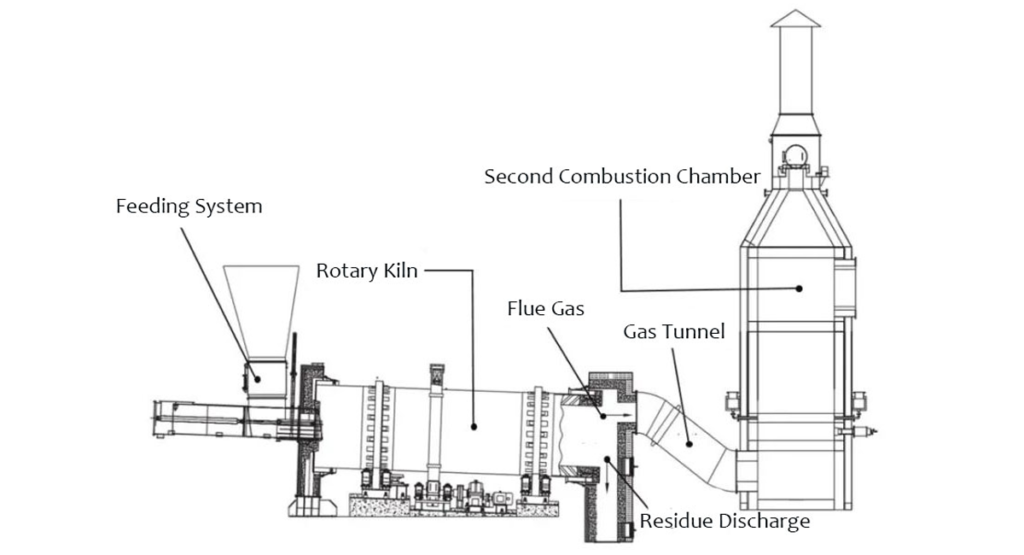
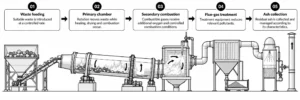
The working principle of a rotary kiln incinerator is based on the controlled thermal destruction of waste at high temperatures. Waste materials are continuously fed into a slowly rotating cylindrical chamber known as the rotary kiln. As the chamber rotates, the waste moves gradually through the system and receives uniform heat exposure.
Inside the primary chamber, moisture is removed from the waste and combustible materials begin to break down through pyrolysis. During this stage, gases and partially combusted solids are produced.
These gases and residues then enter the secondary combustion chamber, where additional air is supplied and temperatures are maintained at a higher level to ensure complete combustion. This process helps destroy harmful organic compounds and reduces the volume of waste significantly.
Before release into the atmosphere, flue gases pass through air pollution control systems such as scrubbers and bag filters. The remaining ash is collected separately for safe disposal. This makes rotary kiln incinerators suitable for handling hazardous, biomedical, industrial, and municipal waste streams.
Main Components of a Rotary Kiln Incinerator
A rotary kiln incinerator is a complex system with several crucial components working together. Here’s a look at the key players:
- Waste Bunker: Holds incoming waste before controlled introduction into the incinerator.
- Waste Feeder: Meters and introduces waste into the primary chamber for efficient burning.
- Chambers (Primary & Secondary): The heart of the incinerator, where waste undergoes drying, pyrolysis, and complete combustion.
- Air Supply System: Provides oxygen to both chambers for efficient combustion.
- Flue Gas Cleaning System: Treats exhaust gases to remove pollutants before release.
- Ash Handling System: Collects and removes the residual ash from the bottom of the incinerator.
Design Innovations: Linings, Insulation, and Temperature Control for Optimal Performance
When it comes to getting the most out of a rotary kiln incinerator, the magic is in the details, especially the materials and engineering choices baked into its construction. Special linings, robust insulation, and advanced temperature control systems aren’t just bells and whistles; they play starring roles in efficiency, safety, and environmental protection.
Monolithic Linings & Ceramic Plates:
Instead of traditional brick linings, some incinerators now use advanced monolithic concrete linings that create a seamless barrier inside the furnace. This means fewer gaps, better structural integrity, and improved heat retention. Add in a ceramic plate between the metal shell and this concrete lining, and the kiln can safely run at temperatures above 850°C without risking damage to the outer drum. The result is less fuel needed to maintain high temps, so the process is both greener and more cost-effective.
Insulation: The Unsung Hero
Thick layers of specialized insulation keep precious heat where it belongs: inside the incinerator. This prevents energy loss, helps maintain consistently high internal temperatures, and keeps the external surfaces cool to the touch, boosting both performance and operator safety. Whether you’re running a compact unit or something mid-sized, modern insulation advances ensure minimal energy waste and safer handling.
Temperature Control & System Integration
It’s not just about reaching high heat; it’s about controlling it with finesse. Enhanced control panels with variable frequency drives (VFDs), along with smart airflow and injector systems, help fine-tune the combustion process for different types of waste streams. This adaptability ensures complete burnout of hazardous materials, reduces potentially harmful emissions, and extends the lifespan of the hardware.
Operational Longevity & Safety
Concrete-lined designs also mean the hottest parts of the incinerator (where waste meets flames) are tough enough to withstand the rigors of daily operation, yet protected from structural fatigue. While the exterior drum remains shielded from direct thermal stress, the interior does the heavy lifting and does it for years.
These design choices all add up to rotary kiln incinerators that are more efficient, reliable, and environmentally responsible, regardless of the waste they treat.
Environmental Considerations of Rotary Kiln Incinerators
Incineration, despite its advantages, has environmental concerns. Let’s explore these considerations and how rotary kilns address them.
Thankfully, modern rotary kiln incinerators incorporate flue gas cleaning systems to minimize environmental impact.
In India, emission standards and waste management practices are regulated by organizations such as the Central Pollution Control Board (CPCB), which provides guidelines for the safe operation of waste treatment facilities.
Potential Environmental Impacts
- Air Emissions: The burning process can release pollutants like particulate matter, nitrogen oxides, and certain heavy metals into the atmosphere. These emissions can contribute to air quality issues if not properly controlled.
Mitigating Measures: The Role of Flue Gas Cleaning Systems
Thankfully, modern rotary kiln incinerators incorporate flue gas cleaning systems to minimize environmental impact. These systems employ various technologies to capture and remove pollutants before they are released:
- Scrubbers: These systems use a liquid spray to capture particulates and some gaseous pollutants.
- Fabric Filters (Baghouses): These fabric filters trap fine particles from the flue gas.
- Selective Non-Catalytic Reduction (SNCR): This technology reduces nitrogen oxide emissions by injecting a special ammonia-based reagent into the flue gas.
Applications of Rotary Kiln Incinerators
Rotary kiln incinerators are versatile workhorses, tackling a variety of waste streams.
- Municipal Solid Waste: A significant portion of the waste we generate in our homes and businesses can be processed in rotary kilns.
- Industrial Waste: Many industries, such as manufacturing and chemical production, utilise rotary kilns to dispose of specific waste streams safely and efficiently.
Rotary kiln incinerators play an important role in modern waste management by reducing waste volume and helping organizations dispose of challenging waste streams safely. Their ability to process a wide range of materials, combined with efficient combustion and emission control technologies, has made them one of the most widely used incineration systems across the world.
Conclusion
A rotary kiln incinerator may be a potential choice of thermal destruction for hazardous and industrial wastes that fit particular criteria since the performance of the technology is highly dependent upon the design and function of the rotating kiln, combustion control, secondary treatment, and proper flue gas and residue handling.
Before the selection of any technology, evaluate the waste stream properties, capacity requirement, operational and maintenance costs, and environmental compliance issues. These factors compared to the desired application will help determine the best treatment approach.
Waste-Gas Flare Incinerators: Burning Off Industrial Excess
Waste-gas flare incinerators are a common sight in various industrial settings, from oil and gas extraction sites to chemical plants, refineries, and even landfills. But how do they actually work, and why are they so widely used?
How They Work
At their core, flare incinerators are designed to safely combust excess or unwanted gases released during production processes. Here is how the process unfolds:
- Gas Collection: Gases generated as byproducts (such as volatile organic compounds or hydrocarbons) are directed to a central stack or flare system.
- Ignition: The collected gases are combusted at the flare tip, where a constant ignition source ensures the gas is rapidly burned as It is released.
- Rapid Combustion: This high temperature combustion quickly breaks down organic materials in the gas, converting them into less harmful substances like carbon dioxide and water vapor.
- Heat and Light: The process often creates a visible flame and generates significant heat side effects that are managed by safety systems.
Typical Applications
Waste-gas flare incinerators play an essential role in:
- Oil and Gas Production Sites: Burning off excess, unprocessed gas that cannot be efficiently captured or transported.
- Refineries and Chemical Facilities: Managing emergency releases or continuous venting during regular operations.
- Landfills: Breaking down landfill gases, including methane, to reduce greenhouse gas emissions.
- Coal Industry: Treating waste gases produced during coal processing or storage.
While effective for managing high organic content, non-hazardous gases, flare incinerators do have environmental impacts, including heat, noise, and greenhouse gas emissions so ongoing innovation and regulation are key to minimizing their footprint.
Rotary Kiln Incinerator Applications in India
Rotary kiln incinerators are widely used across India as industries and healthcare facilities look for safer ways to manage different types of waste. Large pharmaceutical companies, chemical manufacturing units, hospitals, research laboratories, and hazardous waste treatment plants often rely on rotary kiln technology because it can handle a variety of waste streams without compromising combustion efficiency.
In the pharmaceutical sector, rotary kiln incinerators help destroy expired medicines, contaminated materials, and production waste that cannot be sent to landfills. Hospitals and biomedical waste treatment facilities use them for the safe disposal of infectious waste, helping reduce health and environmental risks. Chemical and industrial facilities also depend on rotary kilns to treat hazardous waste generated during manufacturing processes.
With stricter environmental regulations and increasing awareness about sustainable waste management, rotary kiln incinerators have become an important part of modern waste treatment infrastructure in India. Their ability to reduce waste volume significantly while supporting emission control systems makes them a practical solution for organizations seeking responsible waste disposal methods.
Fixed Grate or Direct-Flame Incinerator—Another Incineration Method
How it works: Waste is loaded onto a sturdy metal grate inside the furnace. Beneath the grate, fuel and oxygen produce a direct, high-temperature flame, burning the waste from beneath.
Typical operating temperature: These incinerators maintain temperatures ranging from 1000 to 1500°F—hot enough to ensure effective combustion.
When is it used?
Fixed grate incinerators are often chosen when the waste stream includes solids laced with particles or when a simple, reliable solution is needed for continuous waste burning. You’ll find these incinerators in smaller municipal plants or facilities dealing with general refuse, where robustness and ease of operation are more important than advanced features.
Comparison Between Rotary Kiln and Fixed Grate Incinerators
Both rotary kiln and fixed grate incinerators are used for waste treatment, but they are designed for different operating requirements. While a fixed grate system is often chosen for relatively simple waste streams, a rotary kiln offers greater flexibility and can process a wider range of materials. The comparison below highlights some of the key differences between these two commonly used incineration technologies.
|
Comparison factor |
Rotary kiln incinerator |
Fixed-grate incinerator |
|
Waste movement |
Rotating chamber moves waste through the kiln |
Waste is supported on a fixed grate |
|
Waste suitability |
Can be configured for selected complex waste streams |
Suitability depends on grate design and waste characteristics |
|
Mechanical complexity |
Rotating equipment adds mechanical components |
Simpler grate arrangement in many designs |
|
Combustion control |
Depends on kiln, burner, air and secondary-chamber design |
Depends on furnace, grate, air distribution and control design |
|
Investment and maintenance |
Influenced by kiln, refractory, feeding and pollution controls |
Influenced by furnace design, grate, feeding and pollution controls |
|
Selection criteria |
Waste characteristics, capacity, operating requirements and compliance |
Waste characteristics, capacity, operating requirements and compliance |
Although rotary kiln incinerators require a higher investment, they are often preferred when waste streams are complex or require stricter environmental control. Their ability to handle different waste types and achieve more consistent combustion makes them a practical choice for many industrial and hazardous waste treatment applications.
Important safety issues associated with rotary kiln incinerators
Training and PPE: The people handling these systems should be provided with appropriate training in the use of the system, and protective clothing that is appropriate for the work involved.
Waste identification and feeding: The incoming waste should be identified and managed in an appropriate manner. The method of feeding must be suited to the nature of the waste being managed.
Monitoring: Operators should conduct temperature checks, combustion checks and equipment checks as per the approved operating procedures.
Safety relating to mechanical and thermal issues: Interlocks and other similar measures should be put into place to manage the risks posed by the rotating parts and the hot surfaces.
Pollution control equipment and emergency procedures: This equipment should be appropriately maintained.
Evaluating a Rotary Kiln Incinerator System?
In the selection of waste treatment systems, one needs to take into account the nature of the waste, capacity, operation of the system, and emissions control requirements, among others.
For evaluation of any incinerator in waste treatment processes, contact our company to know what type of equipment is suitable for you.
If you are evaluating rotary kiln incinerators for your facility, you may also find our Biomedical Waste Incinerator, Laboratory Furnace, and Waste Management Equipment solutions helpful when comparing different waste treatment technologies. Discussing your application with an experienced manufacturer can make the selection process much easier and help you identify the most effective waste treatment solution for your needs.
Check this Also: Best Scientific Equipment Manufacturers in India
Certifications & Quality Compliance
|
Standard |
Cert. No. |
Scope |
Valid Until |
|
ISO 9001:2015 (QMS) |
184876 |
Lab, scientific & cleanroom equipment mfg. |
30-03-2029 |
|
CE (MDD 93/42/EEC) |
184877 |
Products as per annexure |
30-03-2029 |
|
GMP |
184878 |
Includes fume hood and a biosafety cabinet. |
30-03-2029 |
|
NSF/ANSI 61 |
183884 |
Bio-safety cabinet, lab & scientific equipment |
08-03-2027 |
FAQs about Rotary Kiln Incinerators
What are the advantages of rotary kiln incinerators?
Rotary kilns offer several advantages over other incineration methods:
Versatility: They can handle a wide variety of waste streams, including solid, liquid, and even gaseous waste.
Efficiency: The two-chamber burning process and continuous rotation ensure high combustion efficiency, meaning a smaller amount of residual ash.
Heat Recovery (Optional): Some rotary kilns can capture heat from the exhaust gases to generate electricity or steam.
What happens inside a rotary kiln incinerator?
Waste goes on a fiery journey through two chambers:
Primary Chamber: Here, drying, pyrolysis (breakdown of organic material), and initial combustion occur.
Secondary Chamber: This chamber maintains very high temperatures for complete combustion of any remaining gases and char from the first chamber. Additional air is supplied in this chamber to aid combustion.
Are rotary kiln incinerators environmentally friendly?
Incineration has environmental concerns due to potential air emissions. However, modern rotary kilns incorporate flue gas cleaning systems to capture and remove pollutants like particulates and some gases before they are released into the atmosphere.
What types of waste can rotary kilns handle?
Rotary kilns are widely used for managing municipal solid waste, the trash we generate in our homes and businesses. They can also handle specific waste streams from various industries like manufacturing and chemical production.
How does the future look for rotary kiln incineration?
Rotary kilns play a vital role in waste management today. As technology advances, the focus will likely be on even cleaner incineration processes or finding alternative waste disposal methods that minimize environmental impact. Waste reduction and recycling efforts will also likely continue to be a priority.
Why Are Incinerator Plants So Costly to Build and Run?
Building and operating a rotary kiln incinerator is no simple (or cheap) affair. There’s a reason these impressive contraptions aren’t popping up in every backyard. The price tag comes down to a few major factors:
Heavy-Duty Infrastructure: The construction phase involves specialized, heat-resistant materials and robust engineering to ensure the kiln can withstand extreme temperatures day in and day out. High-end equipment—from precision waste feeders to complex air systems—adds to the bill, not to mention the extensive safety measures required.
Skilled Workforce Required: Running a rotary kiln isn’t a DIY weekend project. It demands highly trained technicians and operators with expertise in combustion technology, environmental controls, and equipment maintenance. This level of proficiency comes with higher labor costs.
Stringent Regulatory Demands: Meeting rigorous environmental regulations means investing in advanced flue gas cleaning systems and continual emissions monitoring. These systems both raise the upfront investment and add complexity to day-to-day operations.
Ongoing Maintenance: Just like any sophisticated machinery, regular upkeep is essential—not only to keep things running smoothly but also to ensure safety and compliance. The wear and tear from constant high-temperature operation demands frequent inspections and replacement of specialized parts.
All these elements combined make incinerator plants a significant financial undertaking, well beyond just brick and mortar.
Fixed Grate or Direct-Flame Incinerator – Another Incineration Method
Let’s take a look at another common incinerator type: the fixed grate, also known as the direct-flame incinerator. This design is straightforward but effective, especially when handling waste that contains particulate matter.
How it works: Waste is loaded onto a sturdy metal grate inside the furnace. Beneath the grate, fuel and oxygen produce a direct, high-temperature flame, burning the waste from beneath.
Typical operating temperature: These incinerators maintain temperatures ranging from 1000 to 1500°F—hot enough to ensure effective combustion.
When is it used?
Fixed grate incinerators are often chosen when the waste stream includes solids laced with particles or when a simple, reliable solution is needed for continuous waste burning. You’ll find these incinerators in smaller municipal plants or facilities dealing with general refuse, where robustness and ease of operation are more important than advanced features.
Stay Safe: Essential Precautions When Operating a Rotary Kiln Incinerator
Operating a rotary kiln incinerator isn’t just a matter of feeding the beast and letting it roar safety comes first. Here are some critical measures to ensure your team remains out of harm’s way during the incineration process:
Personal Protective Equipment (PPE): Always suit up! Wear heavy duty gloves, full-body aprons, and the appropriate personal protective gear to reduce the risk of cuts, punctures, or contact with hazardous waste. Don’t skimp on safety goggles or face shields, especially when dealing with flying debris or high heat areas.
Eye Protection: If the job calls for extended shifts near the kiln, invest in safety glasses with the correct shade to protect your eyes against heat and intense light.
Pre-sorting Waste: Sort incoming waste according to the designated color coding system before it enters the incinerator. This minimizes unnecessary handling, cuts down operator exposure to infectious materials, and makes the burning process more efficient.
Proper Training: Ensure all operators are trained in incinerator protocols and emergency procedures. Familiarity with all equipment, from waste feeders to ash handling systems, is vital for preventing mishaps.
Safe Handling Practices: Use tongs or mechanical devices for feeding waste never your hands. Maintain a clear workflow to avoid accidental slips or interruptions.
Adequate Ventilation: Always confirm that ventilation and flue gas cleaning systems are functioning optimally. This controls air quality and keeps toxic gases at bay.
Safety isn’t a one-time checklist—it’s a continuous practice woven into every stage of the incineration process. By prioritizing these precautions, operators can keep both themselves and the environment protected while keeping the rotary kiln running smoothly.