A single mistake in cold storage selection can destroy temperature-sensitive vaccines and samples within hours, leading to serious financial loss and compliance issues.
Many laboratories and hospitals get confused between an ice lined refrigerator and a deep freezer, but both serve completely different purposes.
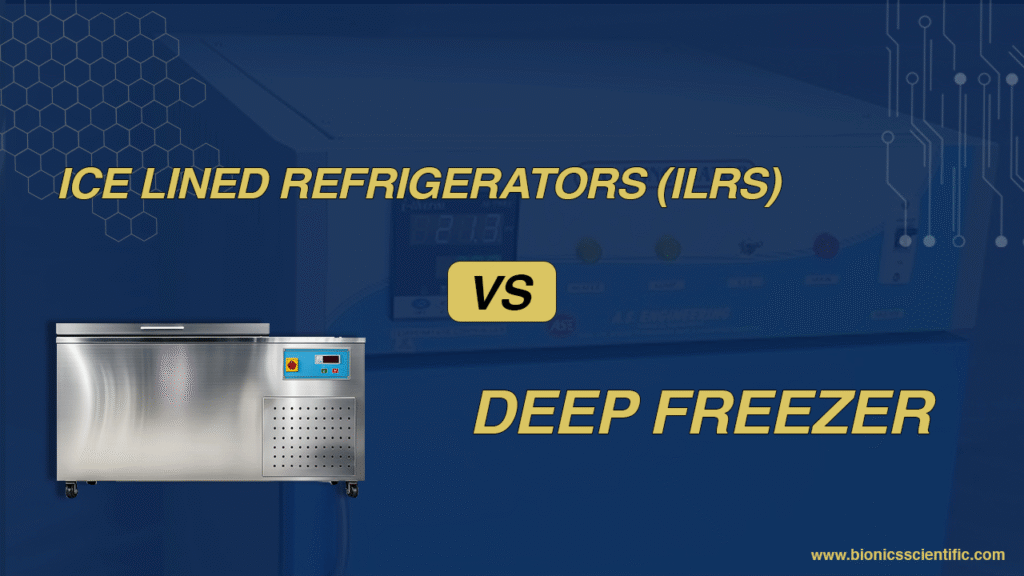
In this guide, we will clearly compare ice lined refrigerator vs deep freezer so you can choose the right equipment based on your application.
Ice Lined Refrigerator vs Deep Freezer: Understanding the Basics
What is an Ice Lined Refrigerator
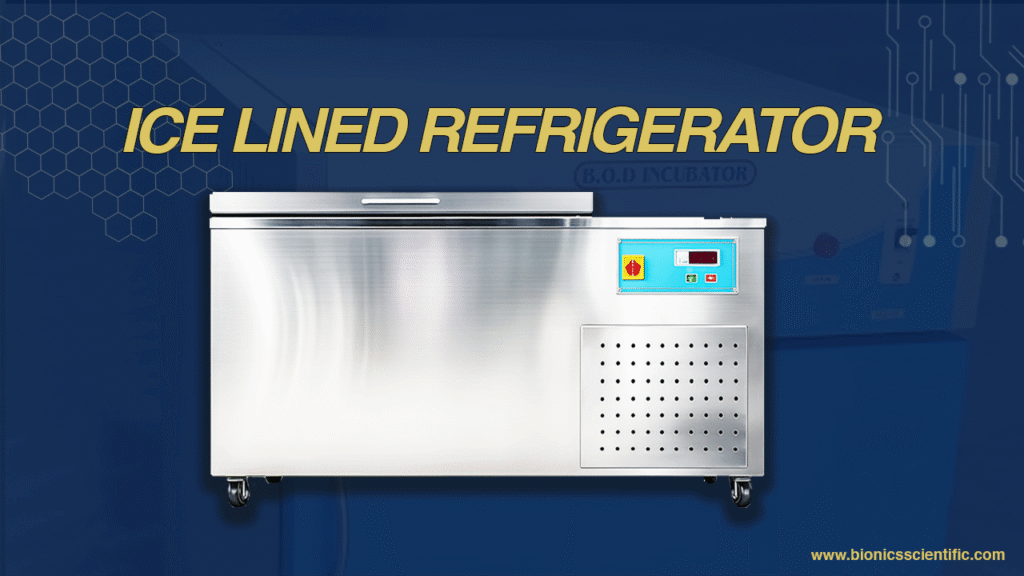
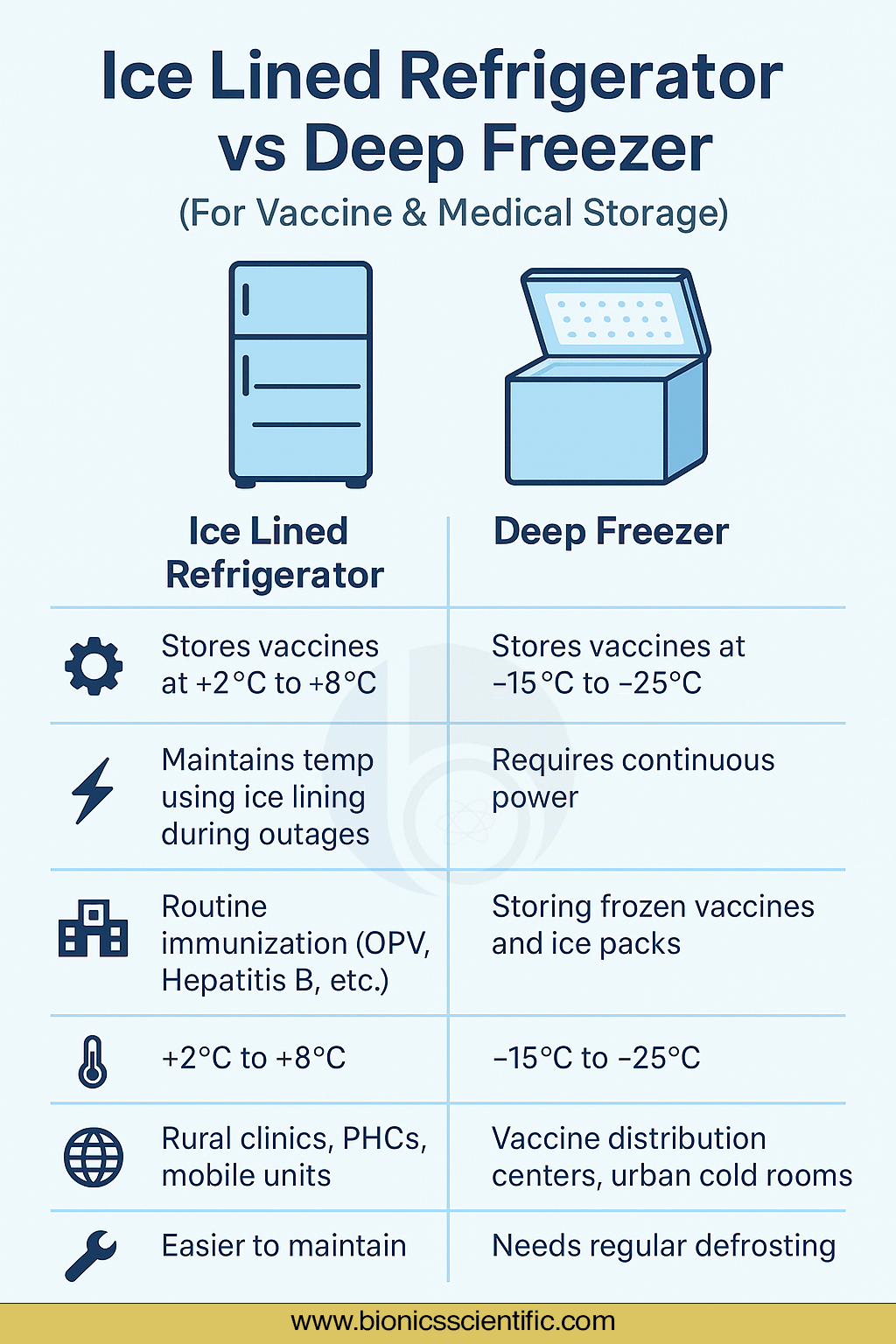
Ice Lined Refrigerators (ILRs) are specifically engineered for vaccine storage, maintaining a stable temperature range of +2°C to +8°C. Using ice lining technology, they ensure temperature stability even during power failures, making them ideal for critical healthcare applications and regions with unreliable electricity.
The key difference lies in temperature stability. ILRs are designed to prevent temperature fluctuations, while deep freezers focus on achieving lower temperatures rather than maintaining uniform cooling conditions.
ILRs are specifically designed to maintain uniform temperature distribution, which is critical for vaccine safety and regulatory compliance.
Explore our laboratory refrigerator range
This makes deep freezers suitable for freezing applications rather than maintaining stable storage conditions required for vaccines.
What is a Deep Freezer?
A Deep Freezer, often used in vaccine cold chains, maintains temperatures below 0°C, typically around -15°C to -25°C. It is used to store vaccines or raw materials that require freezing, such as oral polio vaccines (OPV). Deep freezers are also used to freeze ice packs for transportation in cold boxes or carriers.
Unlike ILRs, deep freezers depend entirely on continuous power supply and are not designed to maintain stable temperatures during outages.
Check our deep freezer systems for laboratory and medical use
Which One Should You Use?
Choose an Ice Lined Refrigerator (ILR) if:
– You need to store vaccines between +2°C to +8°C
– You operate in areas with frequent power cuts
– You require stable and uniform cooling
Choose a Deep Freezer if:
– You need to store vaccines or materials below 0°C
– You need to freeze ice packs for transportation
– Your application involves long-term frozen storage
For most healthcare setups, both systems are used together to maintain a complete vaccine cold chain.
Ice Lined Refrigerator vs Deep Freezer: Key Differences Explained
| Feature | Ice Lined Refrigerator | Deep Freezer |
|---|---|---|
| Temperature Range | +2°C to +8°C | -20°C to -80°C |
| Main Use | Vaccine storage | Long-term sample storage |
| Cooling System | Ice lining backup | Compressor-based |
| Power Failure Safety | High (temperature maintained longer) | Low |
| Typical Users | Hospitals, clinics | Research labs, pharma |
This comparison clearly shows that both systems are designed for completely different temperature requirements and applications.
WHO Guidelines on Vaccine Storage
According to WHO vaccine storage guidelines, temperature-specific equipment must be used for different vaccine types to prevent spoilage and ensure effectiveness.
Investing in the right equipment also ensures compliance with national immunization programs and avoids vaccine wastage.
Final Thoughts
Both Ice Lined Refrigerators and Deep Freezers are critical for effective vaccine storage—but their use cases are not interchangeable. Choosing the right equipment based on vaccine type and storage conditions ensures cold chain safety and preserves vaccine potency.
If you’re setting up or upgrading your cold chain equipment, ensure each unit meets WHO standards and matches your storage needs.
Looking for a reliable Ice Lined Refrigerator for your application?
Bionics Scientific, a trusted laboratory equipment manufacturer with over 25 years of experience, provides high-performance cold storage solutions for hospitals, laboratories, and pharmaceutical applications.
Contact us today to get expert guidance and the right solution for your application.