A flake ice machine usually enters the discussion when existing cooling methods stop working properly.
Sometimes it starts with product quality complaints. In other cases, operators struggle because ice melts too quickly during handling. Laboratories often face a different problem altogether — maintaining sample temperature for longer periods without depending on manually crushed ice every few hours.
This is why many industries eventually move toward flake ice systems.
The structure of flake ice makes cooling faster and more uniform. Instead of sitting in large solid blocks like cube ice, flakes spread around products easily and maintain surface contact properly. That matters in industries where temperature consistency affects product quality directly.
Buyers searching for a flake ice machine in India are usually not looking for a decorative machine or a showroom product. They want something that can run daily without constant maintenance calls or unstable performance.
That practical side of machine selection matters more after installation than during purchase.
Bionics Scientific has been manufacturing industrial and laboratory equipment for over 25 years, and one thing becomes clear during buyer discussions — most companies are less worried about making ice and more worried about avoiding operational trouble later.
What Is a Flake Ice Machine?
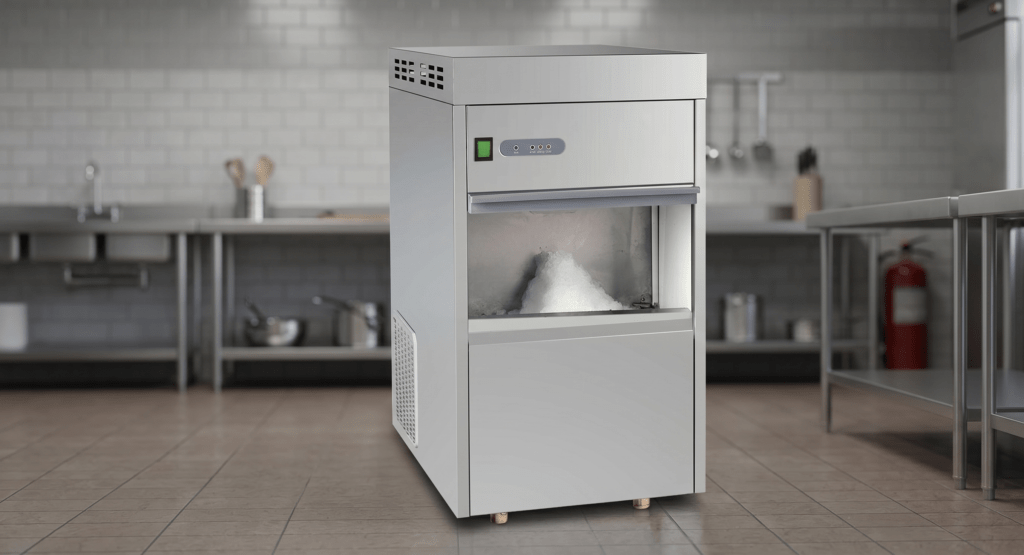
A flake ice machine produces thin layers of dry ice flakes through a refrigerated drum system. Ice forms on the inner wall of the drum and rotating blades scrape it continuously into flakes.
The ice itself feels softer and thinner compared to traditional ice cubes. That softness helps in industries where direct contact cooling is needed without damaging materials or products.
An industrial flake ice machine is commonly used in seafood handling, food processing, pharmaceuticals, laboratories, fisheries, and chemical industries because cooling happens quickly and evenly.
Many industries also prefer automatic flake ice machine systems because continuous production becomes easier without depending heavily on manual operation.
Industries Where Flake Ice Machines Are Used
Flake ice is used in more places than most first-time buyers expect.
In seafood processing plants, workers spread ice directly over fish during sorting and transportation. Since the flakes cover the surface evenly, cooling remains more stable.
Food processing companies use commercial flake ice machine systems during meat handling, bakery processing, and dairy production where maintaining temperature becomes part of quality control.
Laboratories use laboratory flake ice machine units for sample cooling, reagent handling, and temperature-sensitive testing work.
Chemical plants often use an ice flaker machine during controlled reactions where excess heat creates process instability.
Concrete cooling applications and pharmaceutical facilities also use industrial flake ice machine systems during continuous operations, especially in high-temperature regions across India.
Common Problems Buyers Face Before Purchasing
A lot of buyers compare only machine capacity and initial price. Later, they realize the bigger problems were somewhere else.
One common complaint is inconsistent ice quality.Another type of cheap equipment produces wet flakes, which melt very fast, leading to the generation of excess moisture close to the finished good.
The next challenge that is created is that of prolonged usage.
While the equipment may operate efficiently when tested, it fails whenever used for long durations.
In many cases, the refrigeration setup simply was not designed for industrial workloads.
Electricity consumption also becomes a concern after installation. Lower-cost systems sometimes consume far more power than expected during daily operation.
Maintenance creates another layer of frustration.
Some companies discover spare parts are difficult to arrange locally. Others struggle because technical support becomes slow once the machine is delivered.
In laboratories and food industries, body quality matters too. Low-grade metal surfaces eventually begin showing rust or corrosion signs, making cleaning more difficult over time.
How to Choose the Right Industrial Flake Ice Machine
Machine selection should start with actual working conditions instead of brochure specifications alone.
A seafood processing unit operating continuously for long hours will require a very different setup compared to a small laboratory.
Production capacity is obviously important, but buying excessive capacity is not always practical. Larger machines increase power usage, while undersized machines struggle during peak load.
The refrigeration system deserves proper attention because that is where long-term performance usually gets decided.
In Indian weather conditions, machines often operate in high ambient temperatures for extended periods. A properly engineered industrial flake ice machine should continue producing stable ice without unnecessary performance fluctuations.
Body material matters more than many buyers initially realize. Stainless steel construction improves hygiene and usually handles industrial environments better over time.
Water quality should also be considered. In several Indian regions, hard water slowly creates scaling inside systems if compatibility is ignored during machine selection.
Before finalizing a flake ice machine supplier, buyers usually benefit from discussing service availability and spare part support clearly.
Flake Ice Machine Specifications
| Specification | Standard Industrial Model |
| Ice Capacity | 100 Kg/Day to 5 Ton/Day |
| Ice Type | Dry Flake Ice |
| Ice Thickness | 1.5 mm – 2.2 mm |
| Body Material | SS 304 Stainless Steel |
| Cooling System | Air Cooled / Water Cooled |
| Operation | Fully Automatic |
| Compressor | Industrial Heavy Duty |
| Refrigerant | Eco-Friendly |
| Water Feeding | Automatic |
| Applications | Food, Pharma, Laboratory, Fisheries |
Flake Ice Machine Price Factors
Flake ice machine price depends on several practical factors, not just machine size.
Two machines may appear very similar externally while performing completely differently after months of operation.
Compressor quality changes both durability and power consumption. Industrial-grade compressors are built for continuous operation, while lower-grade systems often struggle under pressure.
The form of the body also affects pricing. Even though the stainless steel body costs higher initially, it is cleaner and more robust compared to other body types.
The cooling system used in the body also affects pricing. Water-cooling is preferred in industrial settings; hence air-cooling can be utilized in moderate weather conditions.
The needs of the client also affect pricing. For instance, if the customer wants low noise level products or products suitable for the tropics, the pricing will have to change.
Because of this, experienced buyers rarely judge a flake ice maker machine only through upfront cost comparison.
Low-Quality vs Industrial-Grade Machines
| Feature | Low-Quality Machine | Industrial-Grade Machine |
| Ice Quality | Wet and uneven | Dry and consistent |
| Compressor Performance | Frequent issues | Stable operation |
| Body Material | Standard metal | SS 304 Stainless Steel |
| Hygiene Maintenance | Difficult | Easier cleaning |
| Power Consumption | Higher | Controlled usage |
| Continuous Operation | Limited | Suitable for long cycles |
| Service Support | Uncertain | Technical support available |
| Machine Durability | Lower | Long-term performance |
Why Bionics Scientific
Bionics Scientific has worked with industrial and laboratory equipment manufacturing in India for more than two decades.
During machine discussions, many buyers already know their cooling problem. What they usually need is practical guidance about machine suitability, operating conditions, and long-term usability.
Some industries require compact laboratory flake ice machine setups, while others need high-capacity industrial systems capable of operating continuously.
Instead of recommending identical solutions everywhere, Bionics Scientific focuses on matching the machine with actual process requirements.
That approach generally prevents both oversizing and underperforming installations.
How Bionics Scientific Machines Are Different
A large number of commercial flake ice machine systems available in the market are designed mainly around reducing initial selling price.
The difference becomes visible later during real industrial usage.
Bionics Scientific machines are designed considering Indian operating environments where high temperatures and long operating cycles are common.
The refrigeration systems are selected for stable cooling performance during continuous operation. Stainless steel body construction improves hygiene and reduces corrosion-related issues over time.
The automatic flake ice machine setup also reduces dependency on constant operator involvement during production hours.
Technical support during installation and operation remains equally important because buyers often need assistance after commissioning as well.
Maintenance and Long-Term Performance
Even a good machine performs poorly if maintenance gets ignored for long periods.
In many facilities, dust accumulation around condensers slowly affects cooling performance. Hard water scaling creates another common issue in several regions.
This kind of problem begins slowly. The first sign will be that the machine makes little ice. This will be before there are any serious problems.
When one maintains this machine well, then it will not experience stress.
For industries where cooling directly affects production quality, preventive servicing becomes far less expensive than emergency downtime.
Reliable after-sales support also matters because industrial operations rarely have time for long maintenance delays.
Frequently Asked Questions
Which industries commonly use flake ice machines?
Food processing, seafood handling, laboratories, pharmaceutical facilities, fisheries, and chemical industries commonly use flake ice systems.
What affects flake ice machine price the most?
Capacity, refrigeration quality, compressor type, body material, and cooling system design affect pricing significantly.
Is flake ice suitable for laboratory applications?
Yes. Laboratory flake ice machine systems are widely used for sample cooling and temperature-sensitive testing work.
Can industrial flake ice machines run continuously?
Industrial-grade systems are designed for long operating hours and continuous production conditions.
Which material is preferred for machine body construction?
SS 304 stainless steel is generally preferred because it improves hygiene and corrosion resistance.
Conclusion
The flake ice-making machine will end up being the most important part of the operation in the case of any industrial operation where temperature stability is required for product production.
Choosing a good system means that the operations will be made easier, thus enhancing efficiency, effectiveness, and the entire workflow of the process.
The factor of reliability will always weigh more than the cost of the cooling equipment. The performance of the cooling system will always hinge on the refrigeration capability, reliability, sanitary level, and maintenance level.
Bionics Scientific is dedicated to finding innovative solutions to the Indian industries’ problems.
Tired of Managing Cooling Problems Again and Again?
When the machine is not right, the same issues keep coming back — ice melts quickly, cooling becomes uneven, and production staff keeps adjusting things all day. That is why choosing the right setup matters from the beginning.
If you are confused about capacity, machine type, or pricing, just talk to the Bionics Scientific team. We will help you figure out what actually suits your work. Support is available 24 hours for machine selection, customization, and pricing assistance.