WHO-approved ice-lined refrigerators are designed for safe vaccine storage under strict temperature control conditions. These units maintain a +2°C to +8°C temperature and ensure vaccine safety even during power failures.
WHO approved ILR full form medical must meet the following standards.
What Is an ILR full form medical?
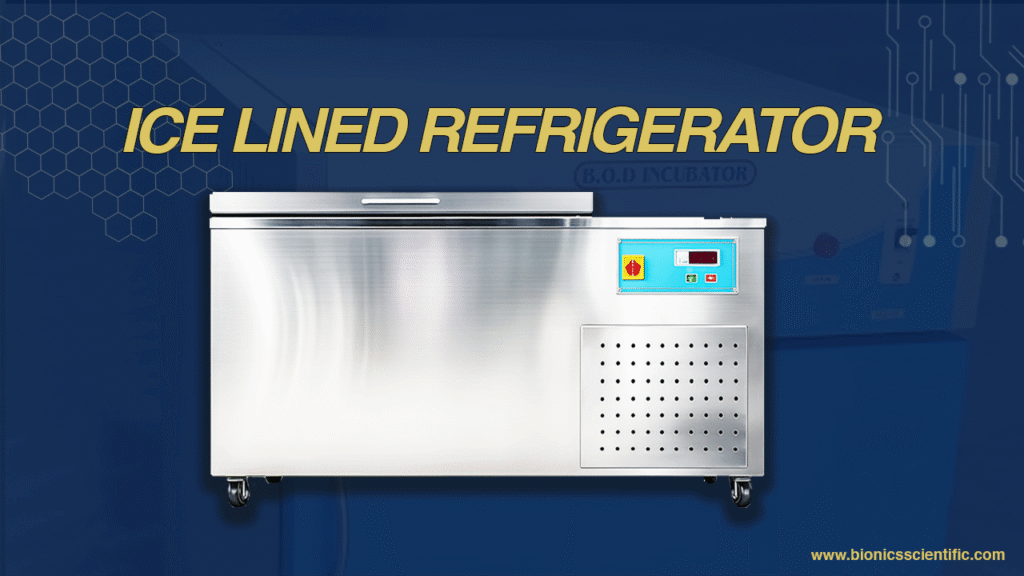
An Ice-Lined Refrigerator (ILR) is a cold storage device designed to store vaccines and medical supplies which requires a temperature between +2°C and +8°C. It contains ice packs or ice linings along its internal walls. These linings help maintain temperature for extended periods during power outages.
Ice-lined refrigerators (ILRs) offer temperature stability and better insulation. The World Health Organization (WHO) has recommended several Ice Line Refrigerators models, making them suitable for use in immunisation programmes like BCG, OPV, DPT, Hepatitis B, and COVID-19 vaccines.
WHO Guidelines for Ice-Lined Refrigerators
WHO certifies ice-lined refrigerators through its PQS (Performance, Quality, and Safety) programme. To be used in immunisation programmes, ILRs must meet the following standards:
– Temperature Range: +2°C to +8°C
– Holdover Time: 20–70 hours during power failure
– Anti-Freeze Protection: Prevents vaccines from freezing below 0°C
– CFC-Free Insulation: Environment-friendly insulation material
A WHO approved ILR full form medical must meet strict WHO PQS standards for safe vaccine storage.
WHO Standards for Ice-Lined Refrigerator
| Parameter | Requirement |
|---|---|
| Temperature Range | +2°C to +8°C |
| Holdover Time | 20–70 hours |
| Certification | WHO PQS |
| Application | Vaccine storage |
The Technical Working: How an ILR Operates
The “Ice Lined” aspect isn’t just a name; it’s a sophisticated thermal engineering solution. Let’s see deeply around it:
- The Lining: The interior walls of the refrigerator are lined with tubes or containers filled with ice packs.
- The Cooling Cycle: While electricity is available, the compressor runs to freeze the water in these linings.
- The Passive Phase: When the power is absent, the ice lining acts as a “cold bank”. It absorbs the heat entering the cabinet, maintaining a steady internal environment through thermal inertia.
- Top-Opening Design: Most ILRs are chest style (top opening). Since cold air is heavier than warm air, it stays at the bottom when the lid is opened, preventing the “temperature spikes” common in upright fridges.
ILR’s Used in Hospitals and Laboratories
ILRs are essential across the modern healthcare spectrum:
- Mass Vaccination Centres: Used in managing high-volume storage of COVID-19, polio, and influenza vaccines.
- Research Laboratories: Used in storing sensitive biological samples and reagents that require zero-fluctuation environments.
- Blood Banks: Used in maintaining the integrity of plasma and whole blood components.
- Remote Healthcare Posts: Used in serving as the primary storage solution in regions with unstable power availabilities.
How Do Icelined Refrigerators Work?
Ice-lined refrigerators (ILRs) work by storing thermal energy in the form of frozen ice linings. During regular operation, the refrigerator cools the chamber and freezes the ice linings. When electricity cuts off, the frozen linings release cold gradually, maintaining the internal temperature.
The compressor cycles on and off during power availability. In regions with unreliable electricity, solar-powered ILRs or battery-supported models can also be used.
Explore our complete range of laboratory refrigerators designed for medical and research applications.
Looking for WHO-approved ice-lined refrigerators for vaccine storage? Contact our experts for specifications, pricing, and customised solutions.
Bionics Scientific is Delhi-based India’s leading manufacturer of laboratory refrigerators. Connect us for ice-lined refrigerator pricing. Call Us: +91 9111161955, 9376651333 | Email us: info@bionicsscientific.com
WHO Prequalification (PQS) — What It Means for Ice-Lined Refrigerators
The World Health Organization’s Performance, Quality and Safety (WHO PQS) programme is an independent certification system that evaluates lab refrigerators like ILRs used in national immunisation programmes. A WHO PQS certificate confirms that a refrigerator has been tested under real-world conditions, including high ambient temperatures, power fluctuations and extended outages & that lab refrigerators meet the safety standards required for storing live vaccines.
How to verify WHO PQS certification?
You can confirm any ILR model’s certification status directly on the WHO PQS online catalogue. Search by product category “E003 – Ice-lined refrigerators” and filter by manufacturer. Certified models carry a unique PQS reference number and list tested holdover times, temperature performance data, and approved ambient temperature ranges.
Bionics Scientific manufactures ILRs built to WHO PQS performance standards. Contact our team to discuss certification requirements specific to your procurement or project needs. Bionics Scientific is a WHO prequalified ILR manufacturer with installations in 15+ countries worldwide.
Key Features of Ice-Lined Refrigerators
Here are the main features to look for in ILRs:
- Temperature Range: +2°C to +8°C: Maintains the safe range for storing vaccines and medicines.
- Holdover Time: 10–24 Hours: The time unit maintains the internal temperature of the refrigerator in case of power failure; it depends on the model and insulation.
- WHO Prequalification: Many ILRs are WHO PQS (Performance, Quality and Safety) certified, which ensures compliance with international immunisation standards.
- Digital Temperature Display: Our ILRs consist of a digital display with temperature recording for better monitoring.
- Alarm System: Includes high/low temperature alarms to alert the user if the temperature drifts outside the safe range.
- Eco-friendly Refrigerant: We use non-CFC refrigerants like R134a or R600a, which are less harmful to the environment.
- Capacity Range: Available in small (30–60 litres), medium (100–150 litres), and large (200+ litres) capacities.
Uses of Ice-Lined Refrigerators
- Immunisation Programmes: The primary use of ILRs is to store vaccines such as BCG, OPV, DPT, Hepatitis B, and COVID-19 vaccines under controlled temperatures.
- Health Clinics and Hospitals: Used in primary health centres, district hospitals, and urban clinics to preserve temperature-sensitive medical products.
- Mobile Vaccine Storage: Some portable ILRs support vaccine outreach programmes in rural and hard-to-reach locations.
- Research and Laboratories: Used for storing biological samples, culture media, and reagents requiring stable temperatures.
ILR Refrigerator Price in India (updated with 2026 prices)
ILR prices vary depending on capacity, build quality, and certification status.
| Capacity | Price Range (INR) | Notes |
|---|---|---|
| 50 – 100 Liters | ₹25,000 – ₹35,000 | Suitable for small clinics |
| 100 – 150 Liters | ₹40,000 – ₹70,000 | For health centers and labs |
| 200+ Liters | ₹70,000 – ₹120,000 | Used in large hospitals |
| Solar ILRs | ₹90,000 – ₹150,000 | For off-grid rural areas |
Note: These prices are variable and depend upon features and customisations or quantity.
Wrap Up to Conclusion
Ice-lined refrigerators are essential for healthcare cold chains, especially in environments where power reliability is a concern. Their ability to maintain stable temperatures during outages makes them crucial in safeguarding vaccine potency and public health. Connect for Icelined Refrigerators’ Pricing
Whether you’re equipping a rural clinic or a research lab, choose an ILR model that matches your capacity needs, complies with WHO standards, and offers proven performance.
Frequently Asked Questions about ILR’s
Q1. What is WHO PQS certification for ice lined refrigerators?
WHO PQS (Performance, Quality and Safety) is an independent certification by the World Health Organization that verifies cold storage devices that meets international vaccine storage standards. PQS-certified ILRs are tested for temperature stability, holdover time, and performance at difference temperatures (As for examples 43 degree celicious).
Q2. What is holdover time in an ice lined refrigerator?
Holdover time is the number of hours an ILR maintains its internal temperature between +2°C and +8°C during a power absesnse, relying on its frozen ice linings. It depends on the model and capacity, this can be ranges from 10 to 24 hours, making ILRs ideal for areas.
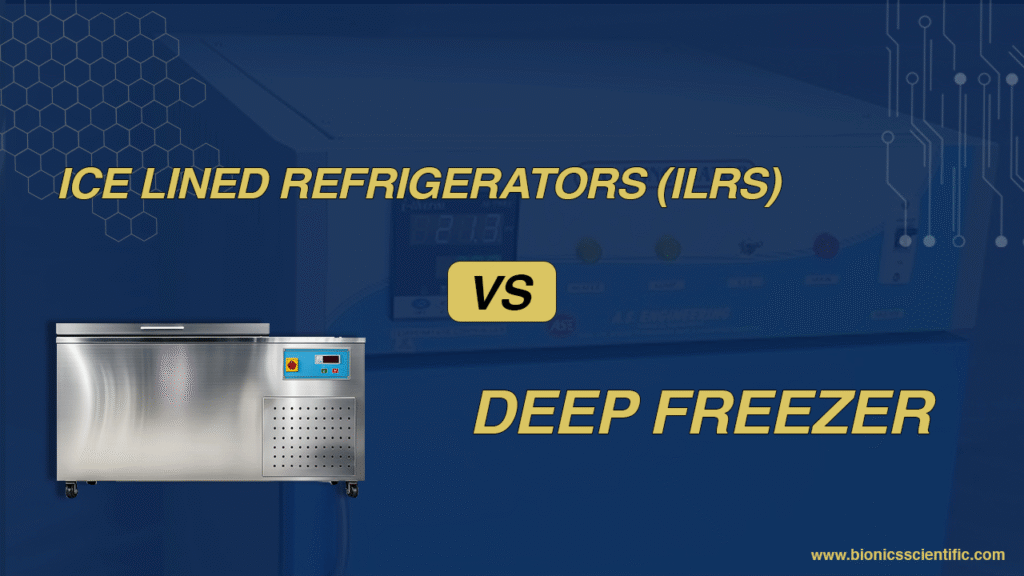
Q3. What is the difference between an ice lined refrigerator and a deep freezer?
An ILR maintains +2°C to +8°C for vaccine storage and uses ice linings for power cutt protection. A laboratory deep freezer operates at -15°C to -25°C for storing freezed dried vaccines and other biologicals requiring sub zero temperatures. They serve different positions in the vaccine cold chain.
Q4. What is the price of an ice lined refrigerator in India?
ILR prices in India range from approximately ₹25,000 to ₹1,20,000 depending on capacity, features, and certification. Small 50 to 100 litre units cost ₹25,000 to ₹35,000 and mid range 100 to 150 litre models cost around ₹40,000 to ₹70,000 and solar powered ILRs cost ₹90,000 to ₹1,50,000.
Q5. Which vaccines can be stored in an ice lined refrigerator?
ILRs are suitable for storing vaccines that require +2°C to +8°C, including BCG, OPV, DPT, Hepatitis B, Hepatitis A, measles and COVID-19 vaccines. Vaccines that must be kept frozen (such as some live attenuated vaccines) require a deep freezer, not an ILR Machines.
Q6. Can ice lined refrigerators run on solar power?
Yes. Solar powered ILR models are designed for off grid rural clinics and remote vaccination sites. They use photovoltaic panels and battery backup to operate the compressor which maintain safe vaccine temperatures without relying on the electricity grid.
Q7. What temperature range does an ice lined refrigerator maintain?
An ILR maintains +2°C to +8°C. This range is ideal for vaccine storage and storing other bio chemical substances too. In bionics ILR’s temperature stays stable even during long power cuts.
Q8. Which capacity ILR is best for PHC vs district hospital?
PHC: 100–150 liters is enough.
District hospital: 200–300+ liters is better.
Capacity depends on vaccine load and demand.
Q9. Is ice lined refrigerator better than normal domestic fridge for vaccines?
Yes, ILR is much better. Domestic fridges have uneven cooling. ILRs provide stable and safe vaccine storage.